


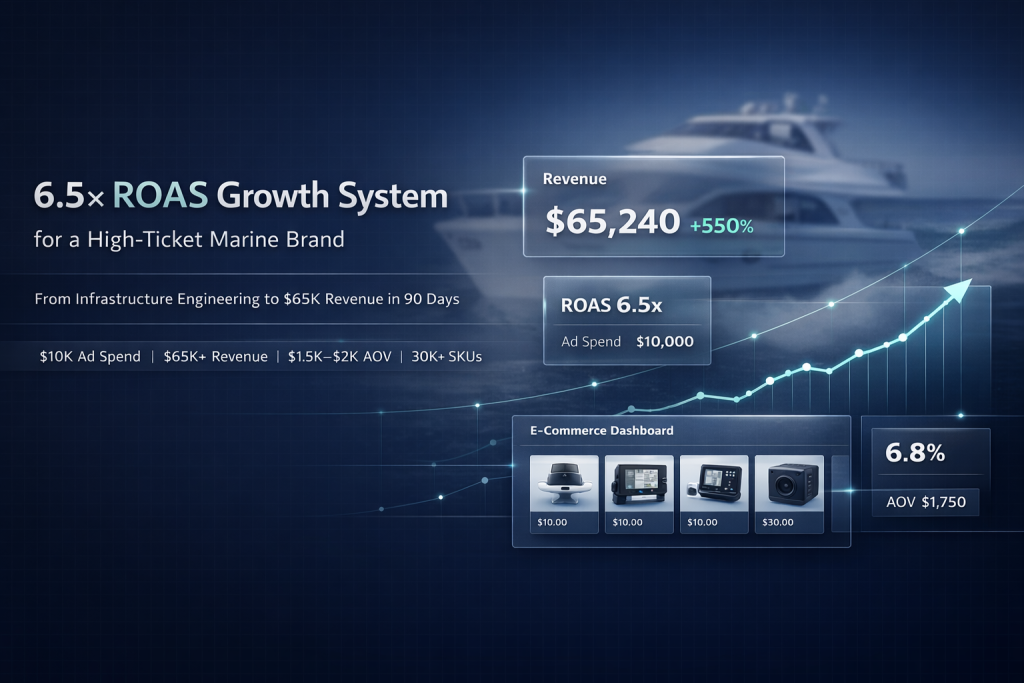
Performance Snapshots at a Glance
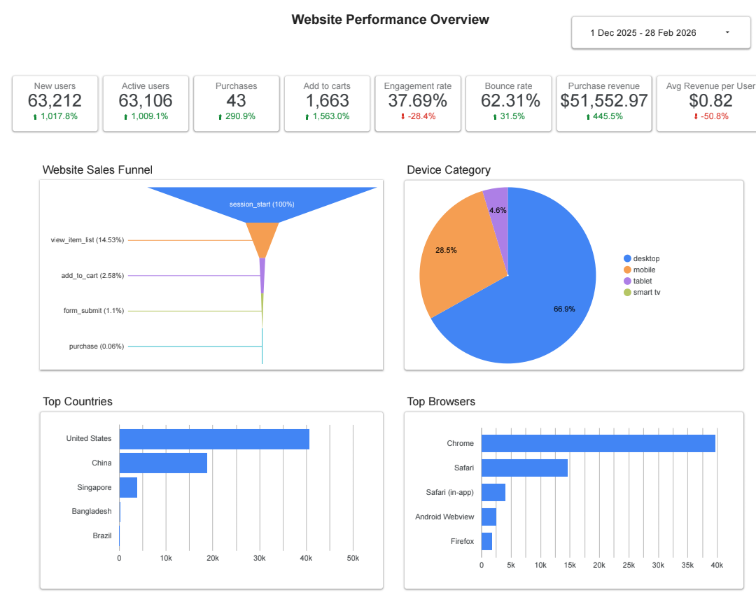
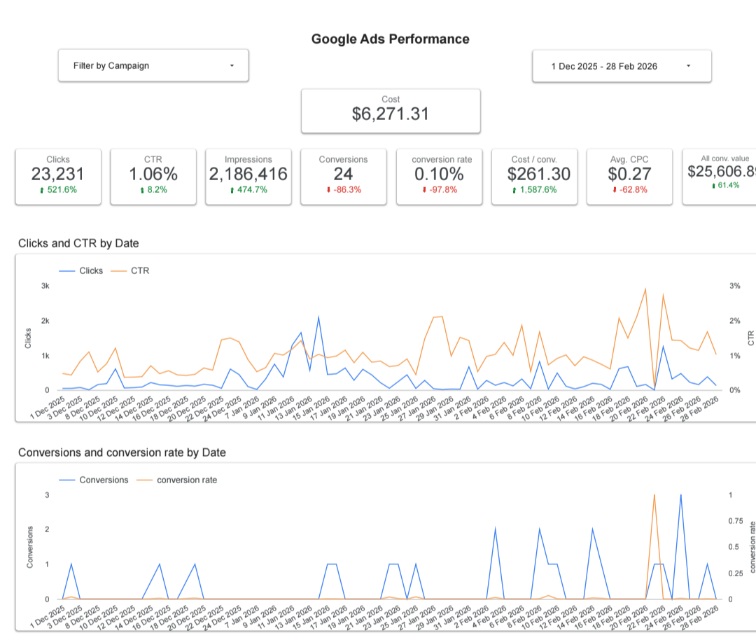
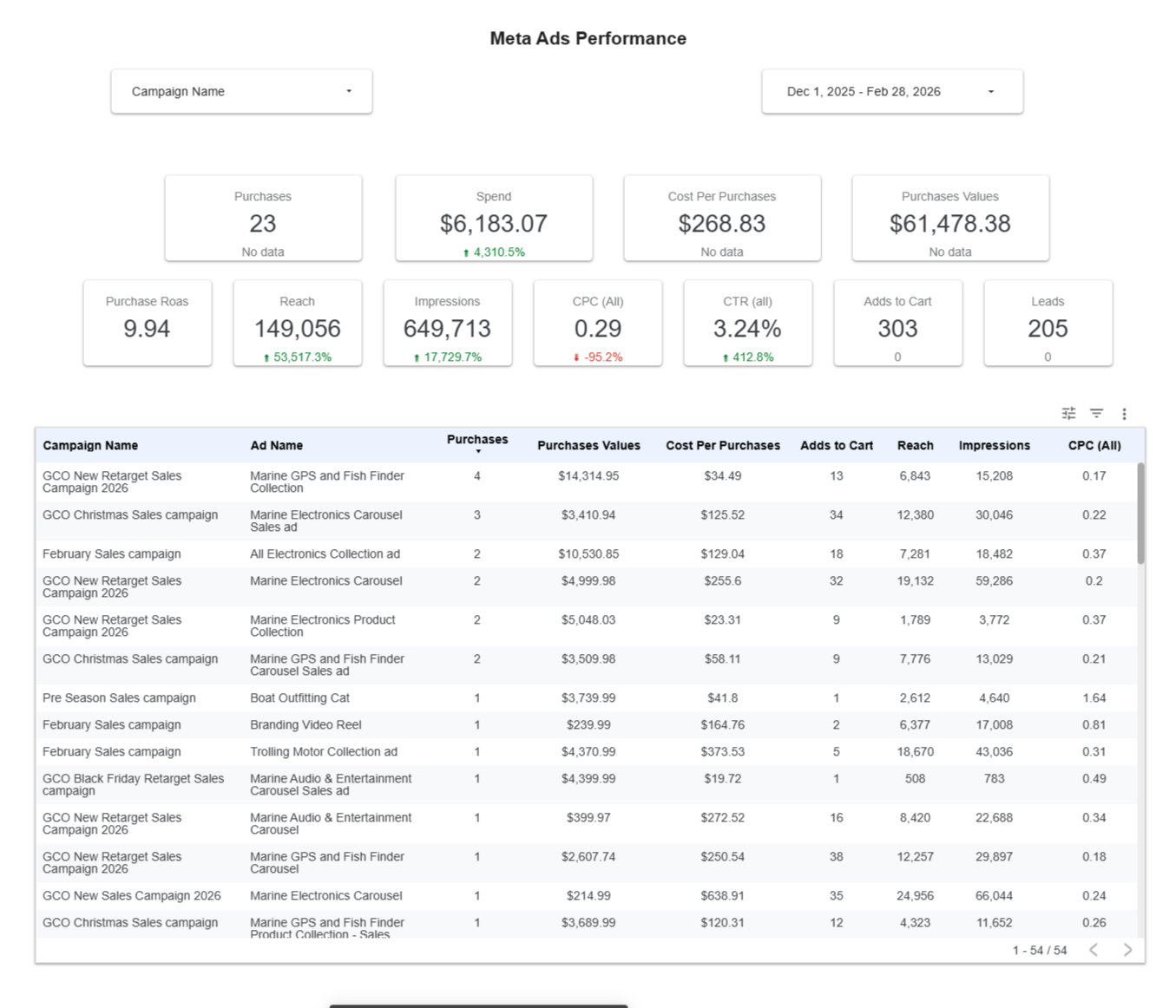
Executive Overview
When I joined this project, the business had inventory depth but no growth architecture.
- 30,000+ SKUs
- 120+ categories
- 300+ brands
- Newly built WooCommerce store
- No structured acquisition strategy
- Weak UX
- Fragile checkout flow
- Zero lifecycle marketing automation
Within 90 days, I designed and executed a full-funnel, omni-channel growth system that delivered:
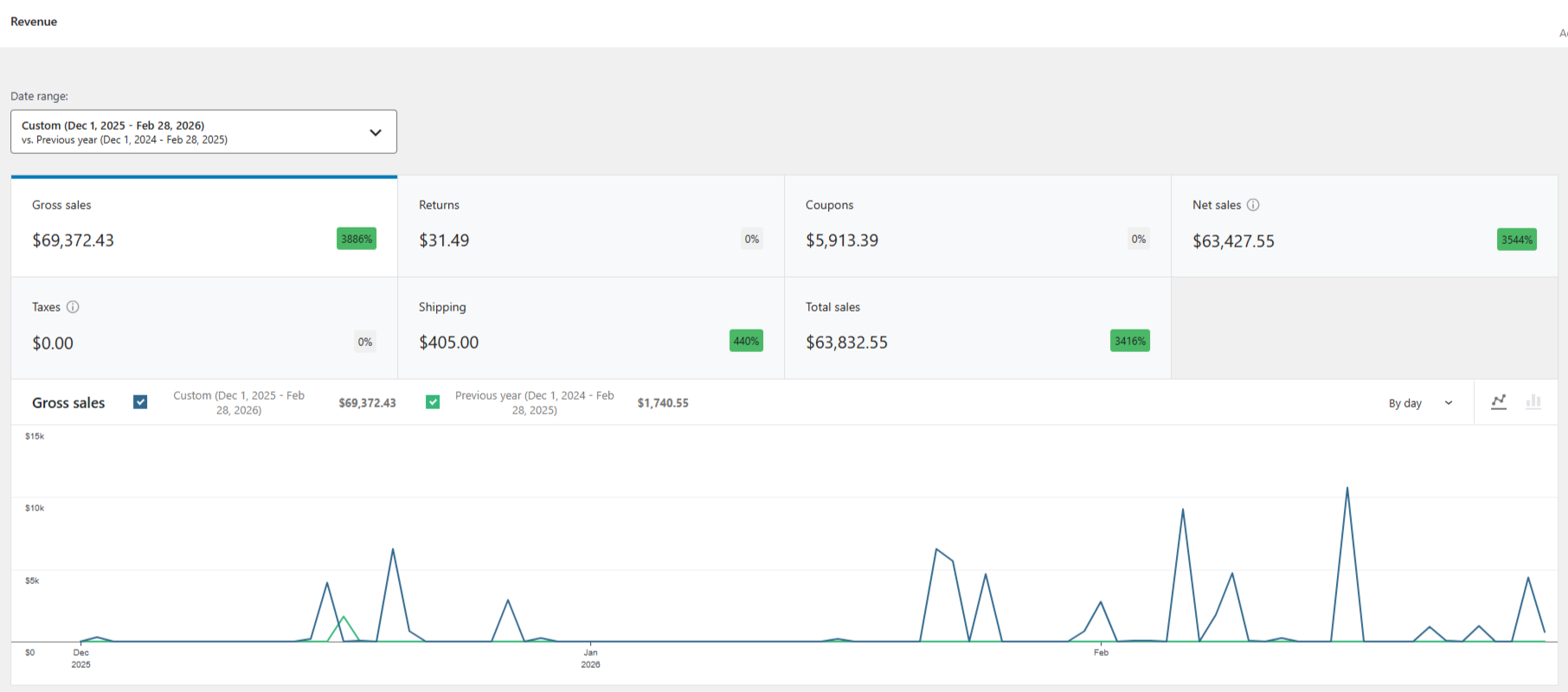
- $69,000+ revenue
- $13,000 total ad spend
- 6.5× blended ROAS
- $1,500–$2,000 AOV
- Email-driven conversion dominance (up to 90% of early purchases)
This was not campaign optimization.
This was infrastructure-led revenue engineering.
Phase 1: Conversion Infrastructure Before Traffic
Most eCommerce brands make a critical mistake: they scale traffic before fixing conversion architecture.
We did the opposite.
Structural & UX Reconstruction
- Directed homepage redesign to reflect authority positioning
- Rebuilt site navigation hierarchy for 30k+ product structure
- Reorganized category logic
- Identified and resolved checkout flow bugs
- Coordinated performance optimization with development team
The objective was simple: No paid traffic until the system can convert.
Phase 2: Data & Tracking Architecture
Before scaling acquisition, I implemented a complete measurement ecosystem.
Search & Indexing Layer
- Google Search Console configuration
- Bing Webmaster Tools integration
- IndexNow API deployment for accelerated indexing
- Crawl health and sitemap refinement
This ensured the massive SKU structure was discoverable and technically sound.
Analytics & Attribution Layer
- Google Analytics with enhanced eCommerce tracking
- Funnel-stage event tracking validation
- Conversion attribution diagnostics
- Microsoft clarity for heat map and live recordings
This enabled data-driven budget reallocation decisions later in the campaign lifecycle.
Commerce & Shopping Layer
- Google Merchant Center setup and feed optimization
- Catalog synchronization for organic and paid shopping visibility
Additionally:
- Google Business Profile optimization
- Bing Places for Business setup
These strengthened brand entity validation signals.
Phase 3: Paid Media System Design
Validation Stage (Initial $1,000 Test Budget for Google Ads)
Campaign Types:
- Performance Max
- Search
Results:
- 3–4 initial orders
- Checkout friction discovered and fixed
Even under limited budget, purchase validation confirmed commercial viability.
Competitive Season Strategy
During peak boating season, large competitors were spending aggressively.
Instead of burning budget on cold Meta traffic, I designed a funnel-based approach:
- Google Ads → Capture high-intent demand
- Meta Ads → Retarget and close
Initial Allocation:
- Google: $2,000
- Meta: $1,000 (retargeting only)
This minimized CAC inflation during competitive months.
Phase 4: Lifecycle Revenue Engine
High-ticket marine buyers require reinforcement before conversion.
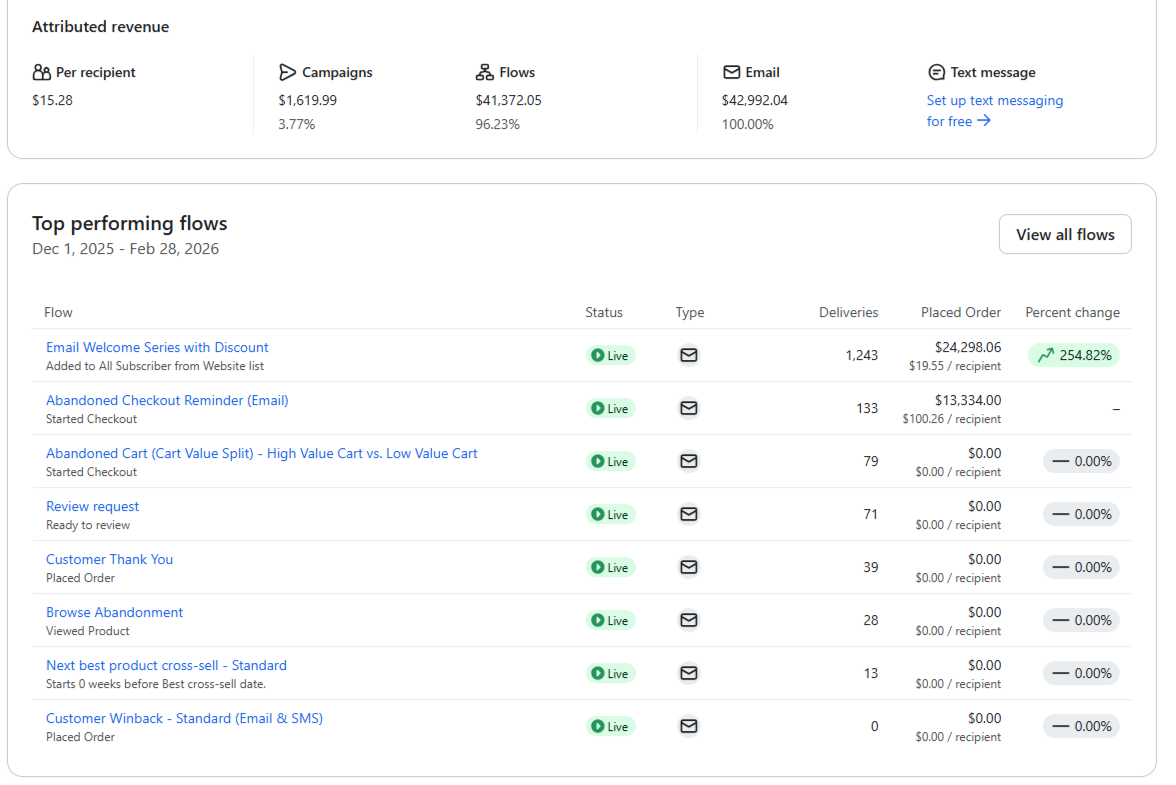
Email automation was built using Klaviyo.
Flows Engineered
- Welcome discount sequence
- Abandoned cart recovery
- Checkout abandonment recovery
- Browse abandonment flow
- Post-purchase engagement sequence
- Customer review integration
Meta tracking ecosystem included:
- Server-side tracking via CAPI
- Catalog sync with Facebook Commerce Manager
- Store activation through Facebook Shop
Result:
In the first month of omni-channel execution:
- ~$20,000 revenue
- ~$3,000 ad spend
- Email contributing nearly 90% of total purchases
That is lifecycle engineering working as intended.
Phase 5: Data-Led Budget Reallocation
Performance data showed:
Meta retargeting was outperforming Google in assisted conversions.
With client approval:
- Google budget reduced to $2,000
- Meta increased to $3,000
Scaling was dictated by performance, not platform bias.
90-Day Performance Snapshot
| Metric | Result |
|---|---|
| Total Ad Spend | $13,000 |
| Revenue Generated | $69,000+ |
| Blended ROAS | 6.5× |
| AOV | $1,500–$2,000 |
For high-ticket marine products in peak season, this performance is commercially strong.
Strategic Capabilities Demonstrated
This engagement proves capability in:
- Large-scale WooCommerce architecture management
- Technical SEO for 30k+ SKU ecosystems
- Server-side tracking and signal preservation
- Funnel-based paid media strategy
- Lifecycle revenue automation
- Cross-channel attribution clarity
- Performance-led scaling decisions
This is growth system architecture, not ad management.
Why This Case Matters
Many brands run ads.
Few build:
- Proper infrastructure
- Tracking clarity
- Lifecycle reinforcement
- Channel synergy
- Scalable revenue systems
This project demonstrates the ability to engineer revenue engines in competitive US markets with measurable financial outcomes.